Hospitals and clinics
Register a patient once. Every department works from the same visit, and serves what is paid.
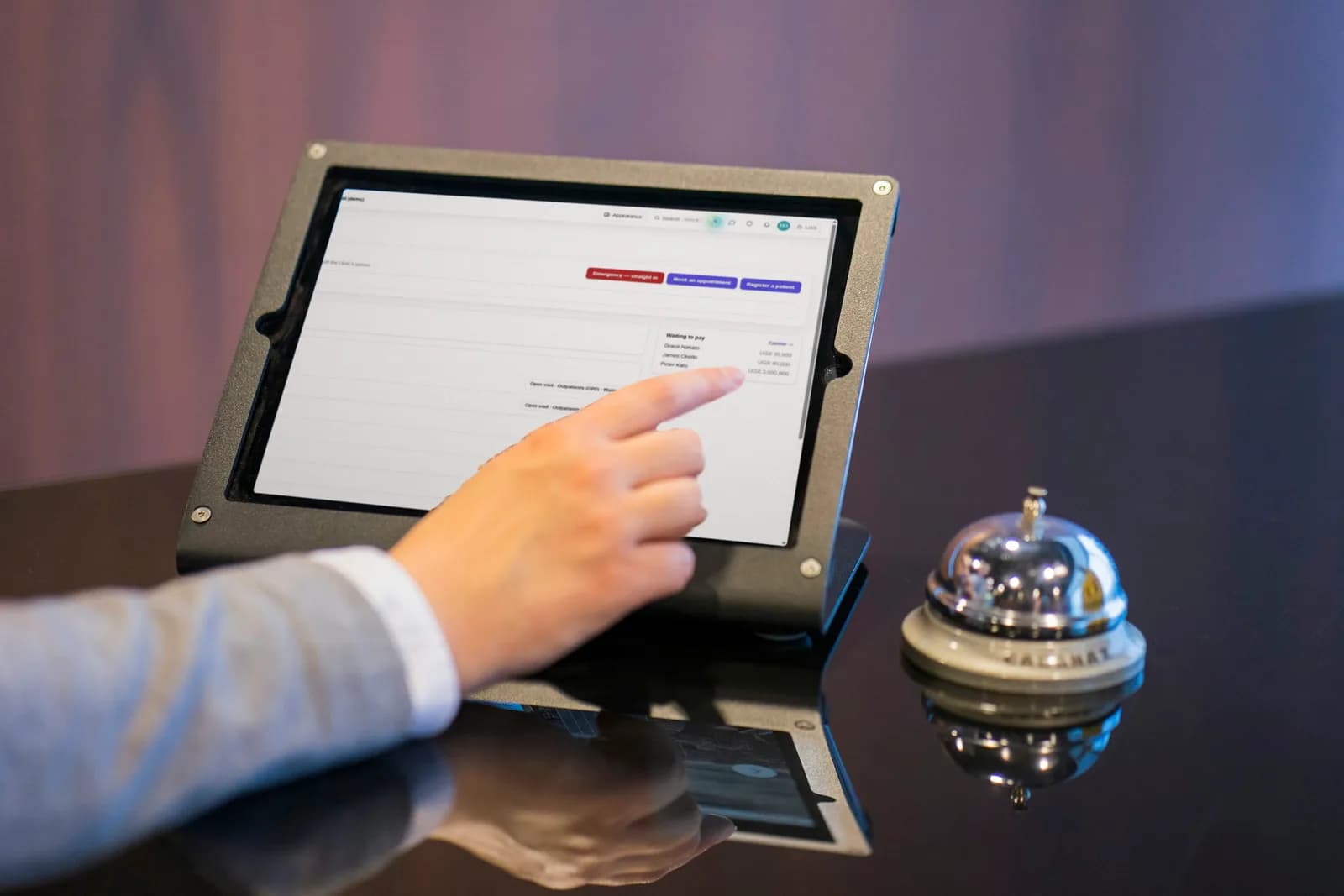
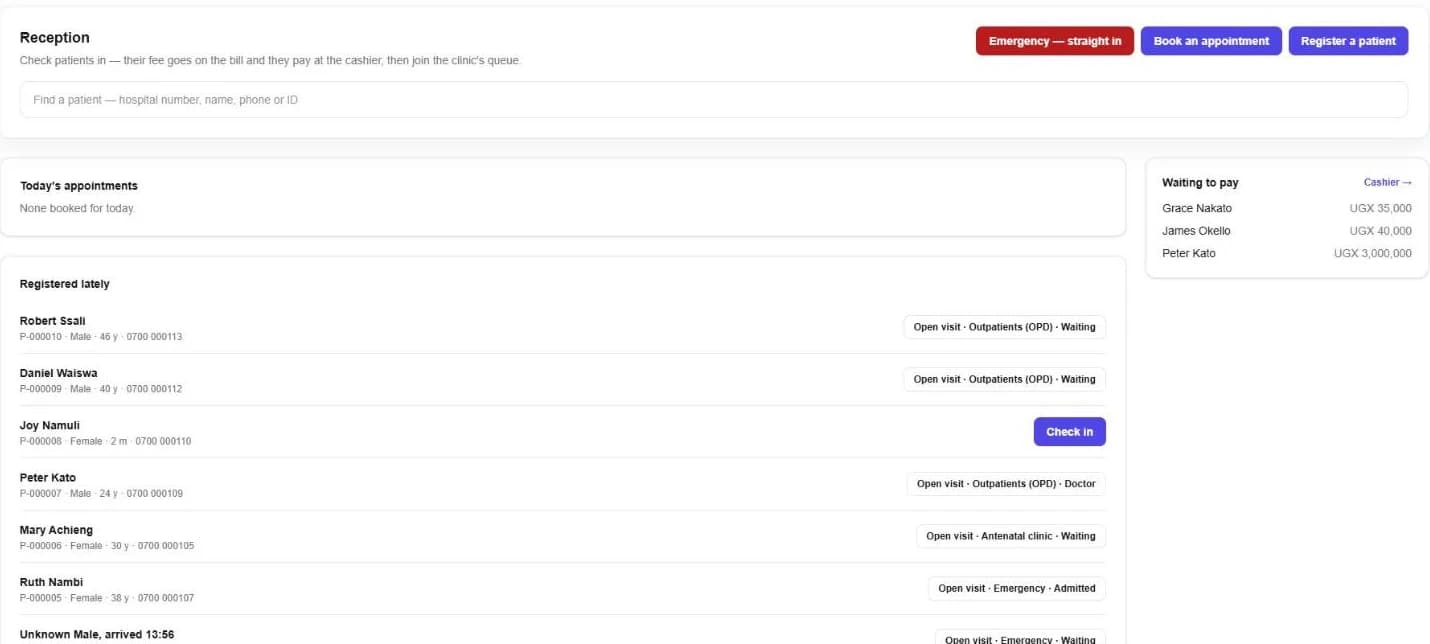
Register and check in
A patient keeps the same hospital number on every visit. Find them, register them, book an appointment, or send an emergency straight through.
Queues and triage
Each clinic keeps its own queue: emergencies first, then urgent cases, then everyone else in turn. Triage records the vital signs the doctor sees next.
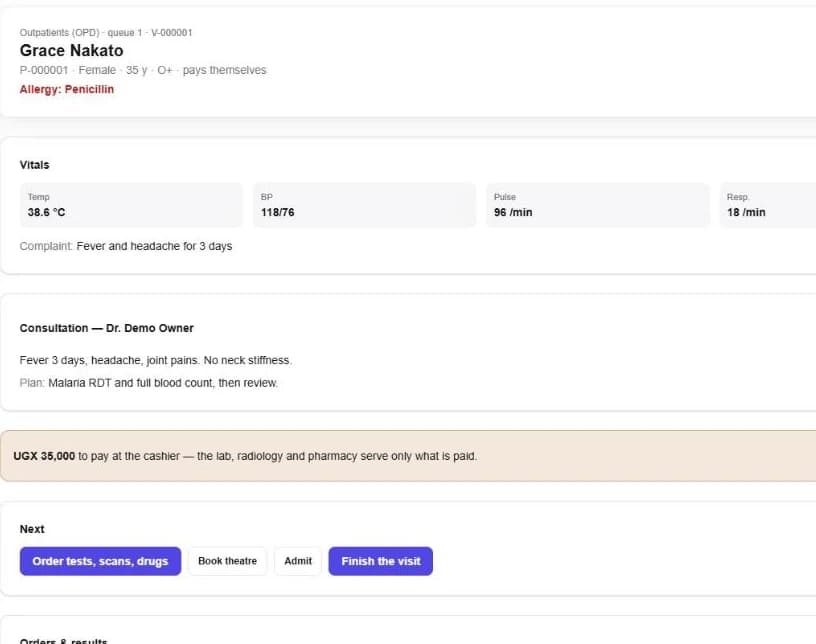
The doctor's screen
Vital signs, the complaint and the notes on one screen, with allergies in red. Order tests, scans and medicines in a tap.
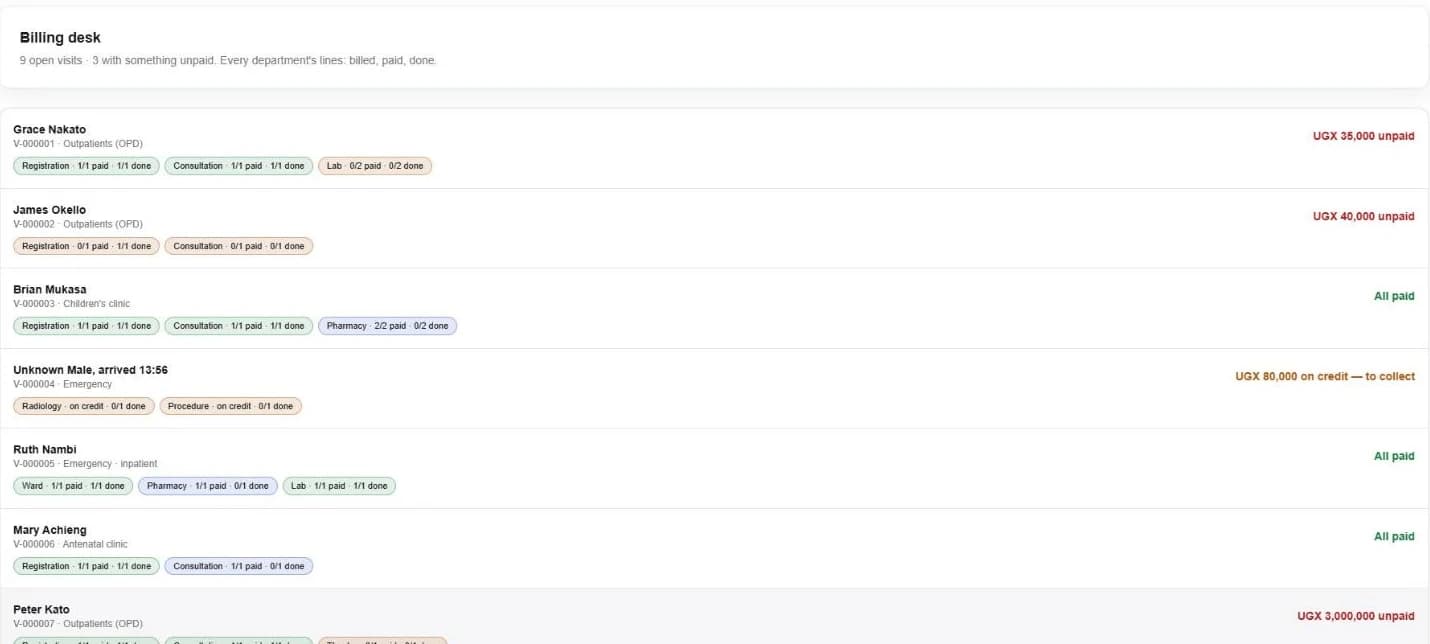
Pay first, then serve
The lab, radiology and pharmacy serve only what has been paid. In an emergency, serve now and settle later. The billing desk shows each department's lines: billed, paid and done.
Wards, beds and deposits
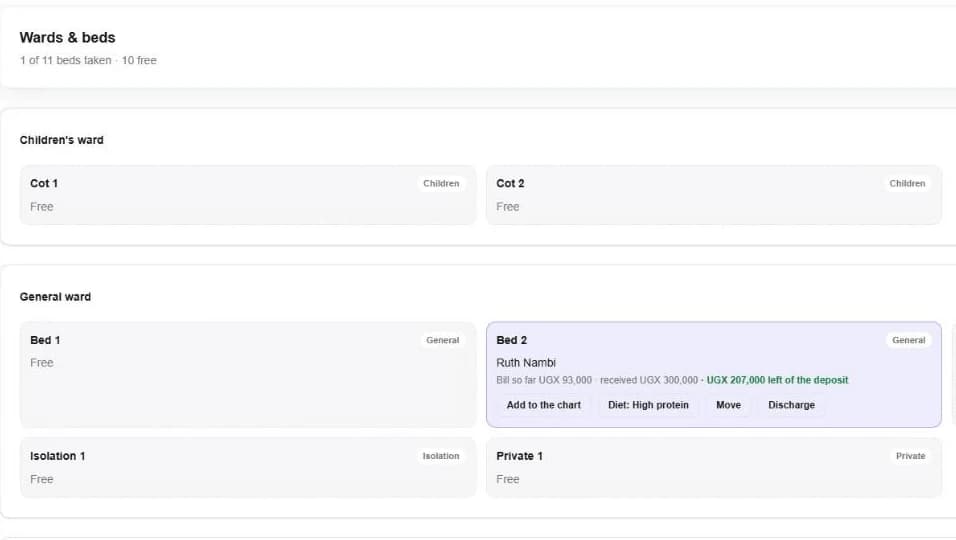
See the free beds in every ward, what each inpatient has spent against their deposit, and the diet the kitchen should send.
The cashier and insurers
Take part-payments and deposits, or let a patient pay later. Claims for each insurer are gathered month by month, ready to send.

Hospital reports
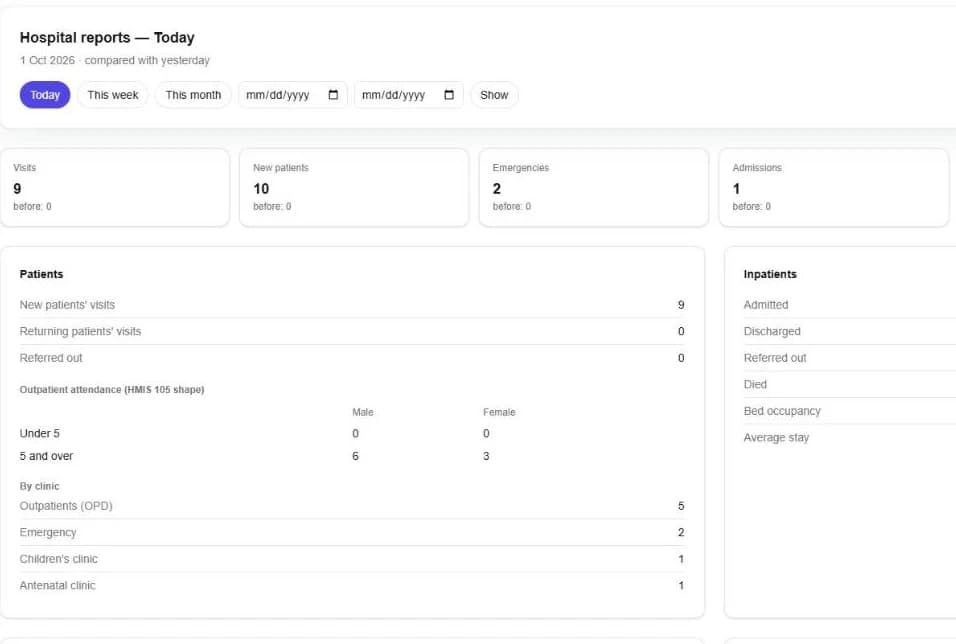
Visits, new patients, emergencies and admissions. Outpatient attendance laid out like the HMIS 105, bed occupancy, and what was billed against what came in.
Records that stay private
Restricted records open only with a reason, and the reason is kept. A trainee's work waits for a senior to co-sign.
Still stuck? Ask us.